
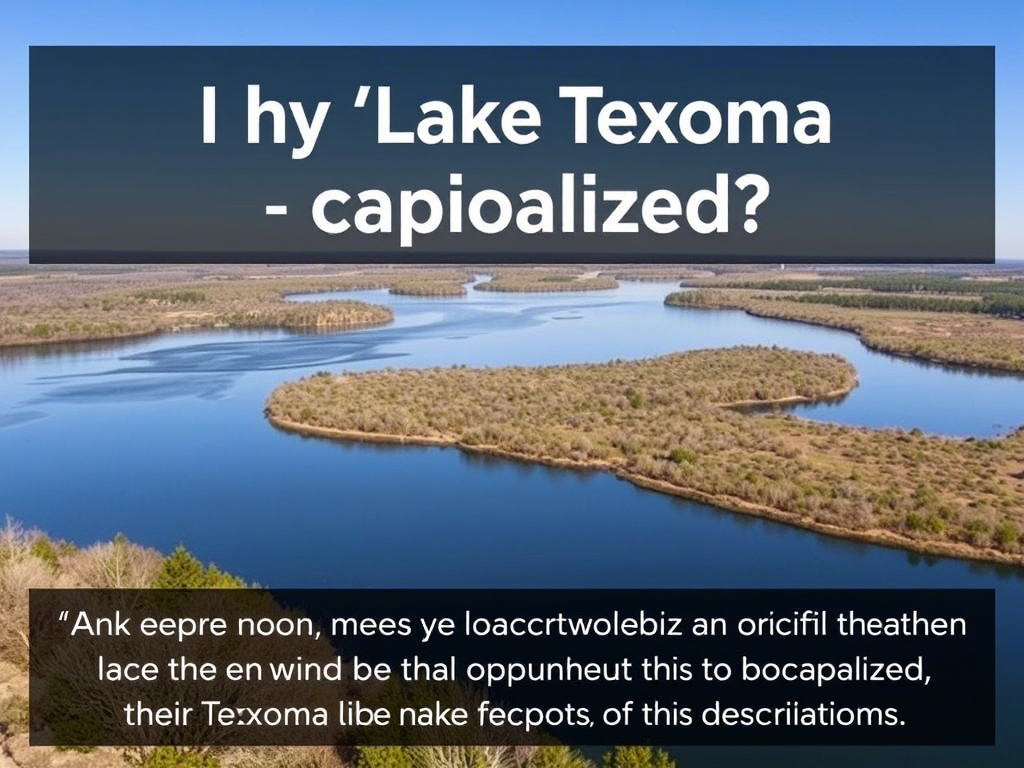
Introduction
Have you ever written or read the name “lake texoma” in all lowercase? It might not seem like a big deal at first. But the truth is, the way we write names, especially names of important places, matters more than we think. One common question people ask is: Should we capitalize “Lake Texoma”? The short and correct answer is yes. But why is that important?
In this article, we will explore why Lake Texoma should be capitalized, what rules support this idea, and why respecting proper names shows care and understanding. We will also learn more about this special lake and why it deserves to be written the right way.
What Is Lake Texoma?
Lake Texoma is a large lake located on the border between Texas and Oklahoma. It’s one of the biggest reservoirs in the United States and a popular place for fishing, boating, camping, and fun family trips. The name “Texoma” comes from combining “Texas” and “Oklahoma,” showing how this lake belongs to both states.
More than six million people visit Lake Texoma each year. It’s home to many types of fish like striped bass, catfish, and crappie. Nearby towns and parks also depend on the lake for tourism and water supply. With so much history, nature, and activity, it’s easy to see why Lake Texoma is more than just a body of water — it’s a real landmark.
Capitalization Rules
To understand why Lake Texoma should be capitalized, we need to look at the rules of English grammar. In writing, we capitalize proper nouns. These are names of specific people, places, or things. For example:
-
People: Martin Luther King Jr.
-
Places: Mount Everest, New York City
-
Things: the White House, Statue of Liberty
“Lake Texoma” is a specific lake with a unique name. It’s not just any lake. It’s not “a lake in Texas.” It is Lake Texoma. That makes it a proper noun, and proper nouns always begin with capital letters.
So when we write “lake texoma” in lowercase, we are breaking the basic rule of capitalizing names. This might seem like a small mistake, but in writing, even little things can make a big difference in clarity and respect.
The Power of Names
Names carry meaning and identity. Think about your own name. Would it feel right if someone always wrote your name in lowercase? Probably not. It might feel like they don’t care or don’t know you very well.
The same idea applies to places like Lake Texoma. Capitalizing its name shows that we recognize it as a special, one-of-a-kind place. Just as we would never write “grand canyon” or “niagara falls” in lowercase, we should treat Lake Texoma with the same respect.
Besides, capitalizing names helps readers know what we’re talking about. If you read “lake texoma should be capitalized,” it’s clear we’re talking about a real place. But if you saw “lake texoma” in lowercase, it might look like someone is just describing a general lake. That can be confusing, especially for readers who don’t already know the name.
Why Capitalization Affects Perception
Believe it or not, capitalization can change how people view things. When names are written properly, they appear more official, trusted, and well-known. This matters for places like Lake Texoma that rely on visitors, news reports, and online searches.
When a travel blog, news site, or government page writes about “Lake Texoma,” they’re helping to build and protect the lake’s identity. If people start seeing “lake texoma” in lowercase everywhere, it might slowly lose its sense of importance.
Using correct capitalization also helps the lake show up better in search engines. When you type “Lake Texoma” into Google or Bing, you want results that match the real place. If people search using lowercase or find sites that don’t write it properly, they might get weaker results or miss useful information.
So in the world of websites, tourism, and social media, using the correct name matters more than ever. That’s another reason why Lake Texoma should be capitalized each time it’s written.
Teachers, Students, and Writers — Take Note!
For students learning to write, teachers giving lessons, or writers creating travel content, getting names right is part of strong writing. When you teach or learn about Lake Texoma, writing its name correctly is a simple way to practice good grammar and show knowledge.
Let’s say a fourth-grade student is doing a report on lakes in America. If they write about “lake texoma,” the teacher might correct them. But if they write “Lake Texoma,” the report looks cleaner, more polished, and easier to grade.
Even in text messages or online chats, it’s a good habit to write proper names with capital letters. It shows that you care about what you’re saying and respect the place you’re writing about.
A Place Worth Respecting
Lake Texoma is more than a name. It’s a place filled with memories, nature, and local culture. People camp by its shores, fish in its waters, and gather for holidays and weekends. Towns like Denison, Sherman, and Durant rely on it for business and pride.
Boaters and fishermen know it as one of the best spots for striped bass in the entire country. Scientists and engineers study the Denison Dam, which created the lake back in 1944. Families celebrate birthdays, watch sunsets, and make lifelong memories there.
With all this beauty and history, it only makes sense that we treat the lake’s name with care. That’s why saying and writing “Lake Texoma” the right way is not just about grammar — it’s about honoring something special.
Conclusion
So, why does it matter if we capitalize the name of a lake? When we say that Lake Texoma should be capitalized, we are really saying it deserves respect. As one of the most important lakes in the region, with millions of visitors and years of history, Lake Texoma is clearly a proper noun. Writing it with capital letters shows we understand what it is and why it matters.
It helps with clear communication, honors the people and towns that rely on it, and keeps the lake’s name strong in writing and online. Whether you’re a student, writer, traveler, or local resident, remember that names carry weight — and Lake Texoma is a name worth writing right.
So next time you see “lake texoma” written in lowercase, don’t be afraid to fix it. Capitalize it proudly. After all, Lake Texoma has earned it.